Wednesday, March 30, 2011

Bleed Blue but do it for Poonam Pandey

Model Poonam Pandey to bare all if India wins WC


After Paraguay model Larissa Riquelme, who promised to run naked through the streets if Paraguay won the football World Cup, an India [ Images ]n model plans to do something alike if India beats Pakistan and goes on to win cricket's showpiece event.

Cricket-crazy model Poonam Pandey says she will bare-all if the Indian team wins Wednesday's semi-final against the neighbours at Mohali.

Pooam PandeyAccording to reports, the city-based model, has decided to go nude in front of the entire stadium if India ends up winning the World Cup.

Claiming she is just trying to motivate the Men in Blue, Pandey said she even won't mind giving the team a private show in the dressing room if they win.

She added that she does not have qualms of even undressing in the stadium, if the law permits, and after permission from the Board of Control for Cricket in India.

What better motivation does Dhoni [ Images ] and his men need to conquer the world!

Tuesday, March 22, 2011

Nanonoko

A great mini-documentary on randy "nanonoko" lew, one of online poker's greatest grinder

Friday, March 18, 2011

Remembering Chernobyl

As the Japanese fight tooth and nail, heres a look at how Chernobyl looks today:
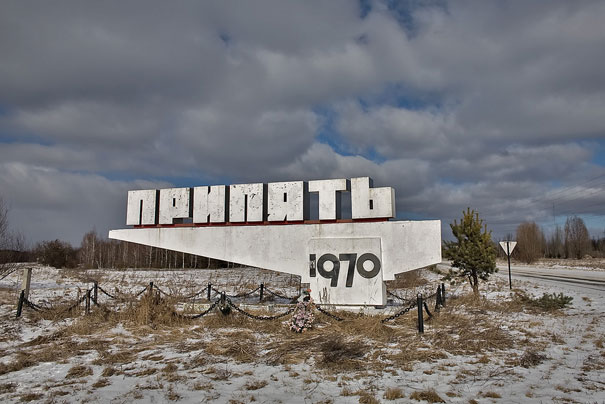
(Image credits:Pedro Moura Pinheiro via: BoredPanda)

“The sign on the road to Pripyat, the town where the workers of the nuclear plant lived.”

The bridge of death

(Image credits:Vivo (Ben) via: BoredPanda)

“After the explosion at Reactor 4 the people of Pripyat flocked on the railway bridge just outside the city to get a good view of the reactor and see what had happened.

Initially, everyone was told that radiation level was minimal and that they were safe. Little did they know that much of the radiation had been blown onto this bridge in a huge spike.”

They saw a beautiful rainbow coloured flames of the burning graphite nuclear core, whose flames were higher than the smoke stack itself. All of them are dead now – they were exposed to levels of over 500 roentgens, which is a fatal dose.

P.S.: note that the photo above is made from 2 different photos (top photo of the reactor and bottom photo of the bridge in Pripyat joined together)

Schools
(Image credits:misterbisson via: BoredPanda)

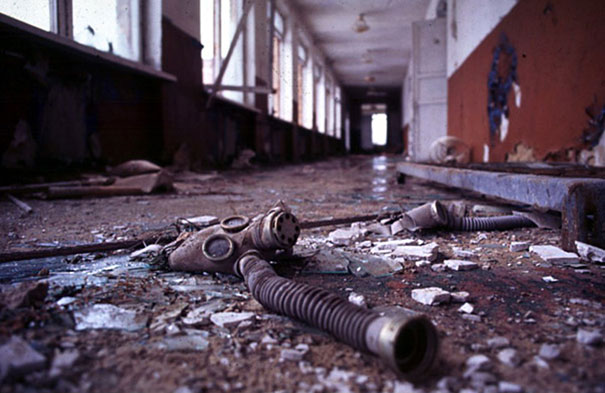
“Deserted secondary school near Chernobyl, Illinsty, Ukraine. Dec 1995 0.96.07.01.19”
(Image credits:left: Vivo (Ben) and right: Anosmia via: BoredPanda)

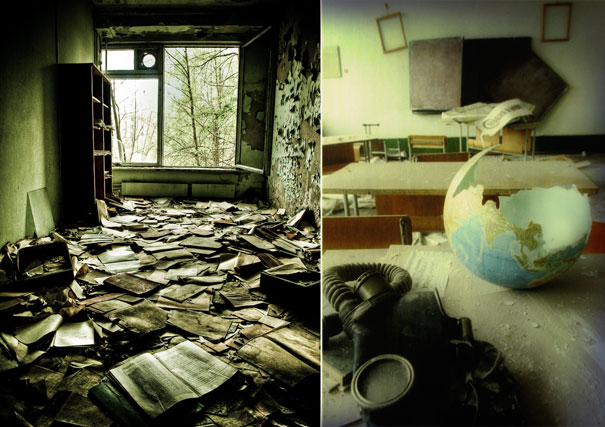
Left: “One of the five schools of Pripyat, each teaching about 1000 children. The schools have remained relatively intact considering the problems with looters eight years ago. I guess books don’t hold much value to the poor. “

Right:”At a 20th anniversary Chernobyl exhibit on Capitol Hill.”
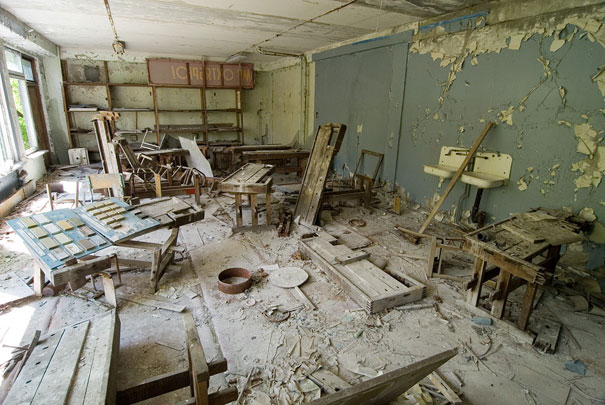
(Image credits:zbruch via: BoredPanda)

“Children will never run here again.”
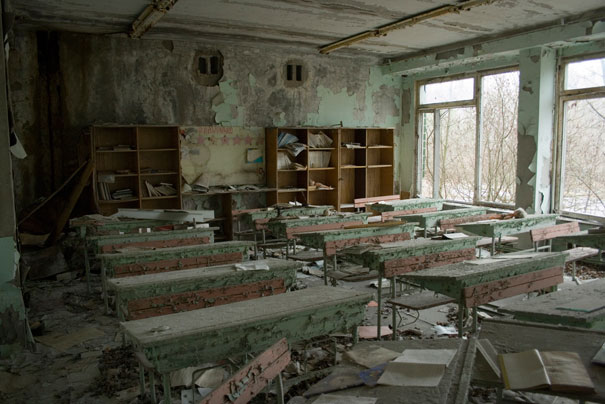
(Image credits:oinkylicious via: BoredPanda)
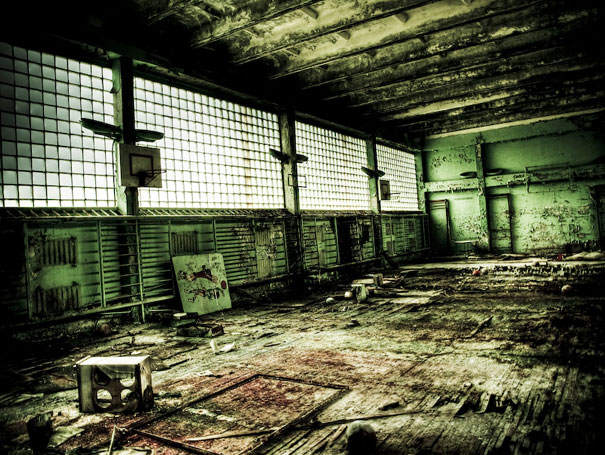
(Image credits:Vivo (Ben) via: BoredPanda)

“Gym class”

Kindergarten
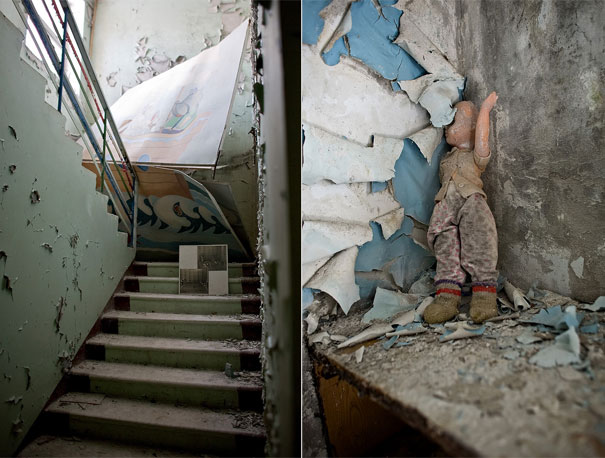
(Image credits:Pedro Moura Pinheiro via: BoredPanda)

On the left: “Stairs on the creche/kindergarten near the center of Pripyat.”; on the right: “Broken doll on top of a corner cupboard in one of the rooms in the creche/kindergarten in the center of Pripyat.”
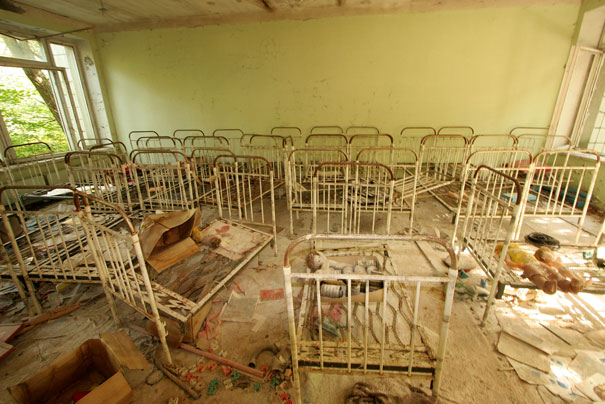
(Image credits:hanszinsli via: BoredPanda)

“Nursery in the creche/kindergarten”.
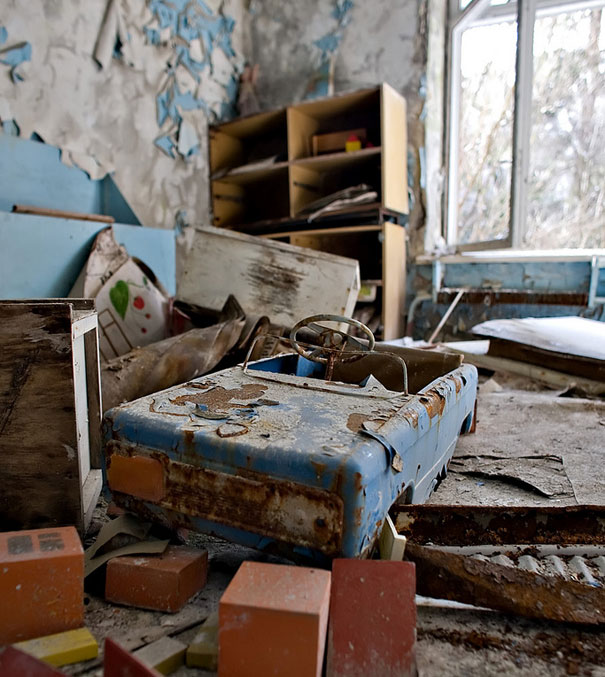
(Image credits:Pedro Moura Pinheiro via: BoredPanda)

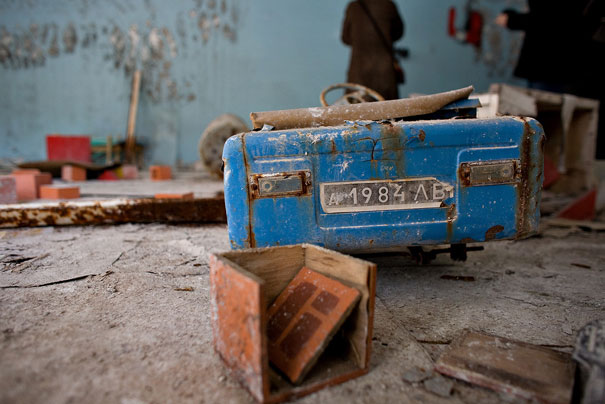
”Child’s big toy car in one of the rooms of the creche/kindergarten”. Notice the number plate of the car – 1984. It must be manufactured 2 years before the accident.
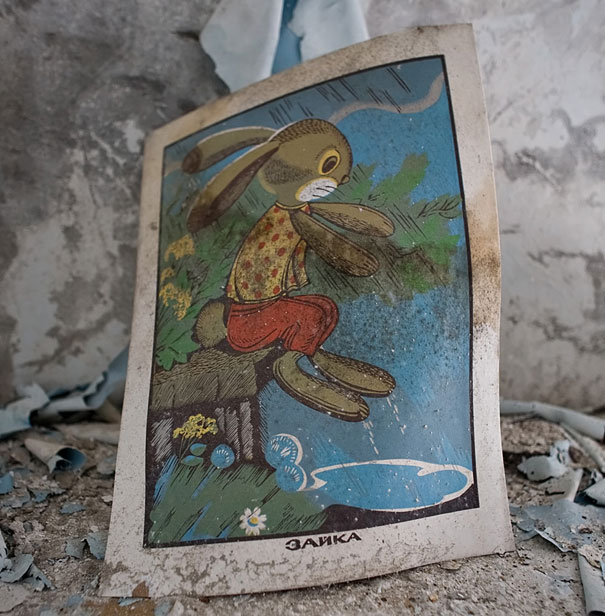
(Image credits:Pedro Moura Pinheiro via: BoredPanda)

The note says “Rabbit”. I love those old-school soviet style drawings.
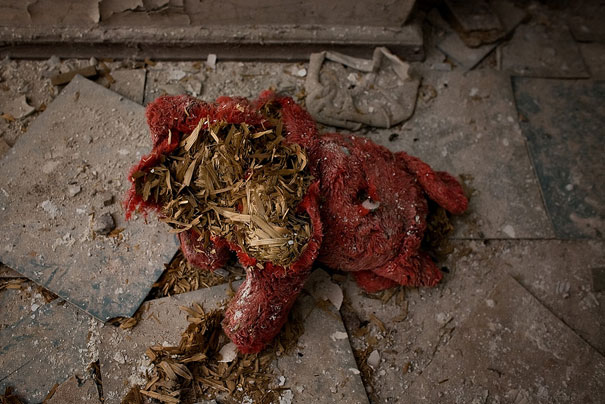
(Image credits:Pedro Moura Pinheiro via: BoredPanda)

“Hay stuffed toy”.
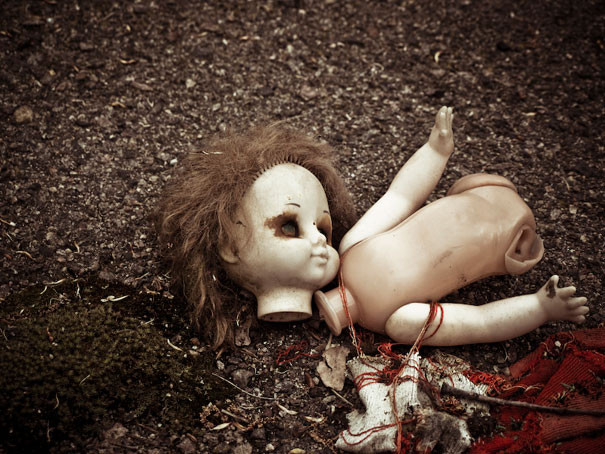
(Image credits:Vivo (Ben) via: BoredPanda)

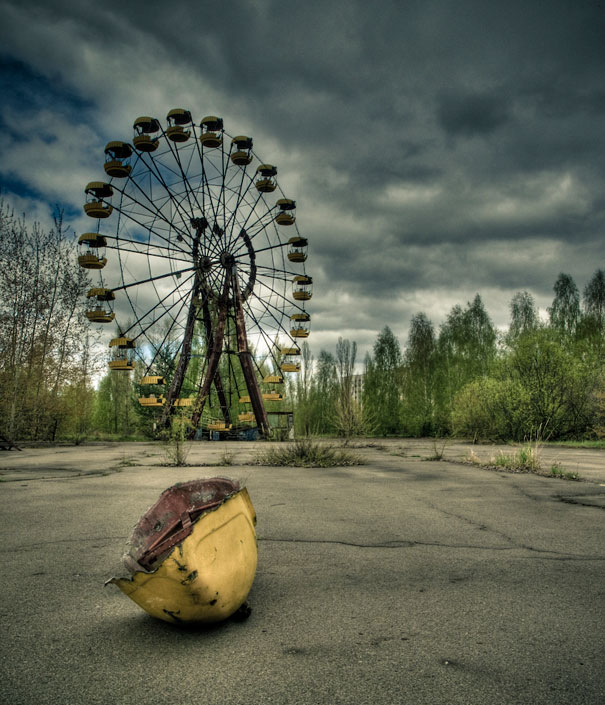
Pripyat funfair
(Image credits:Vivo (Ben) via: BoredPanda)

“Pripyat funfair was due to be opened on May 1st. The Chernobyl disaster happened April 26th.

No one ever managed to ride the ferries wheel. It remains one of the most irradiated parts of Pripyat since the disaster, making it still dangerous today, 22 years on.”
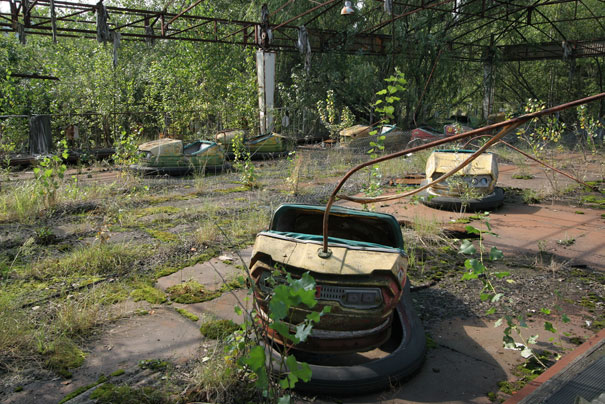
(Image credits:hanszinsli via: BoredPanda)

“Bumper car ride in the amusement park in central Pripyat, it was to be opened on the May 1st celebrations of 1986, five days after the accident”
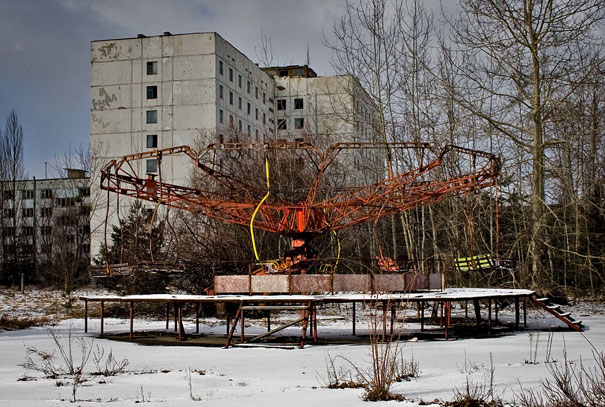
(Image credits:Pedro Moura Pinheiro via: BoredPanda)
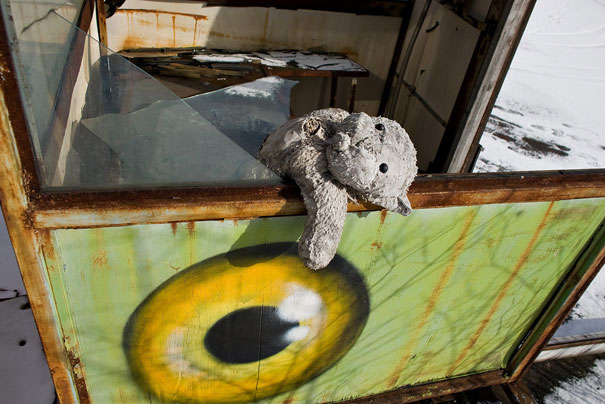
(Image credits:Pedro Moura Pinheiro via: BoredPanda)

“Ferris wheel control or ticket booth in the amusement park .. I’m sure the plush teddy bear was placed there later by someone looking for an emotional photo, but it’s interesting also to document the later attempts of using the accident to achieve certain media goals.”

Hospital
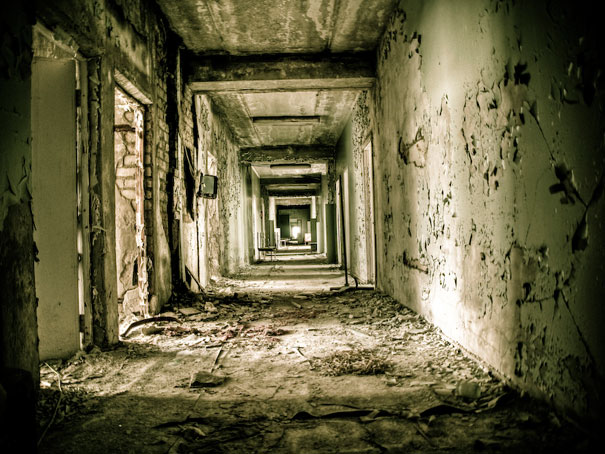
(Image credits:Vivo (Ben) via: BoredPanda)

“Hospital corridor”.
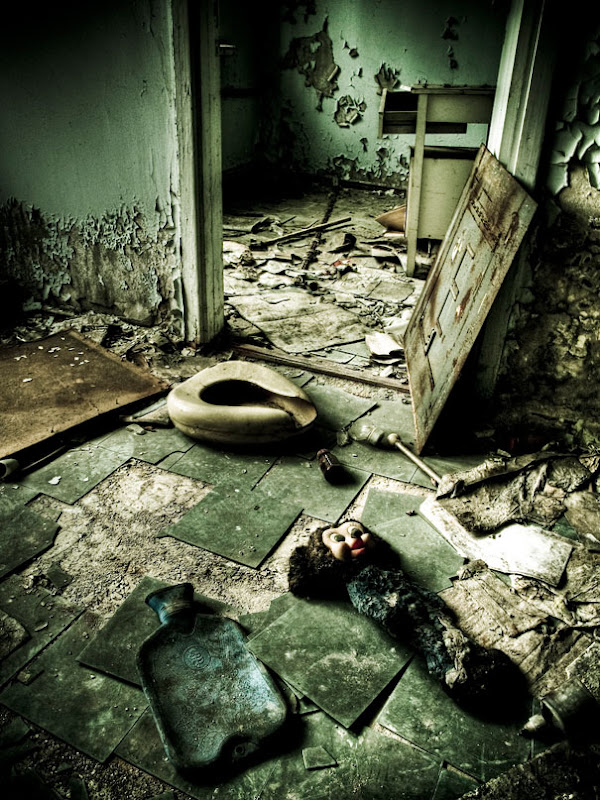
(Image credits:Vivo (Ben) via: BoredPanda)

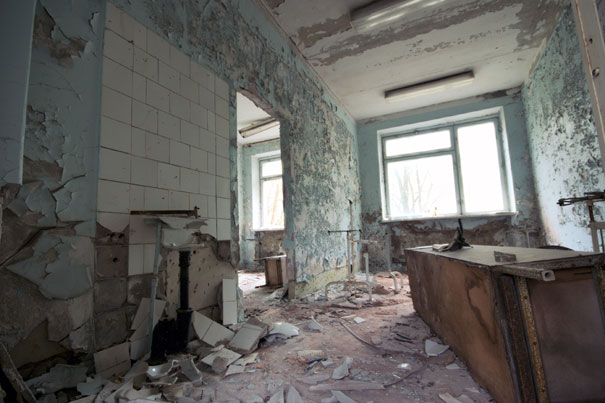
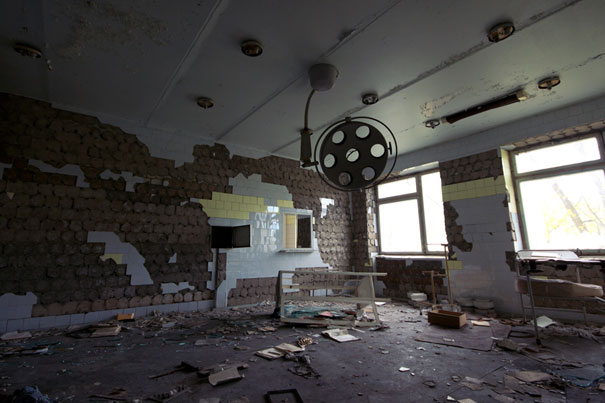
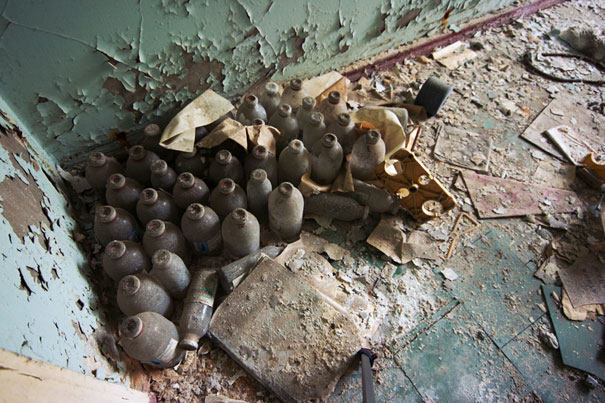
“Found just outside the surgery in the hospital. This hospital received many of Reactor 4′s first victims for treatment immediately after the explosion. The hospital itself however was already exposed to huge amounts of radiation.

Every rescue worker who attended the initial explosion was killed by radiation poisoning.”
(Image credits:abandonia via: BoredPanda)
(Image credits:abandonia via: BoredPanda)
(Image credits:abandonia via: BoredPanda)

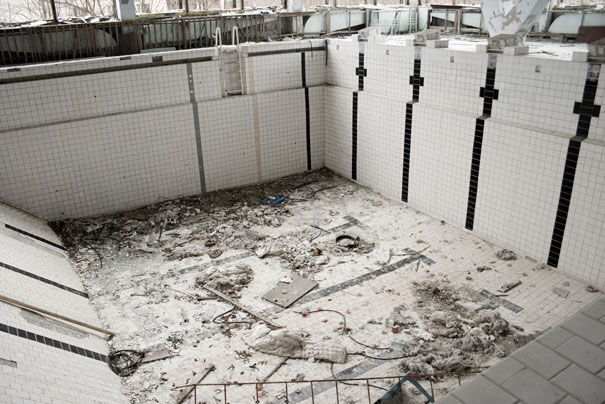
Swimming Pool

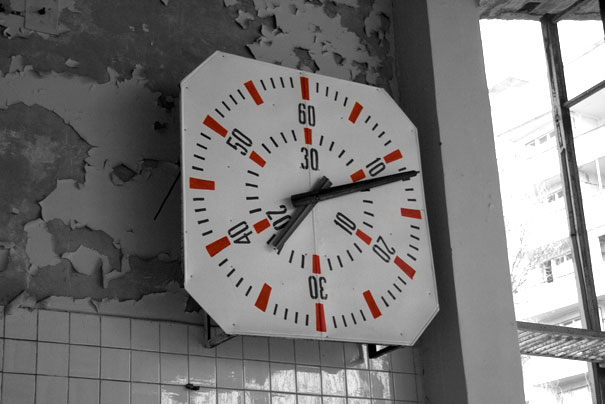
Olympic athletes must have been training here for the 70′s/80′s. The pool is really huge – this place must’ve been the best around.
(Image credits:oinkylicious via: BoredPanda)
(Image credits:oinkylicious via: BoredPanda)

Other buildings
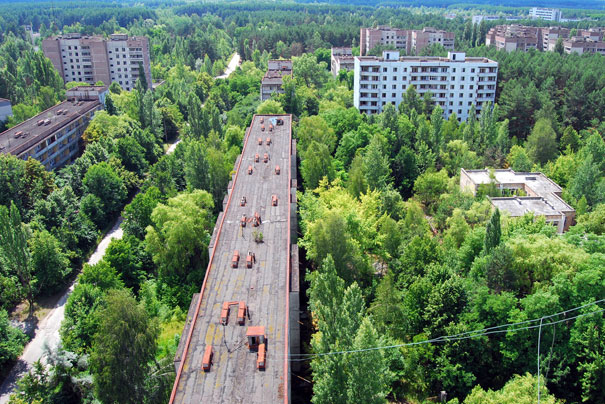
(Image credits:rusocer via: BoredPanda)

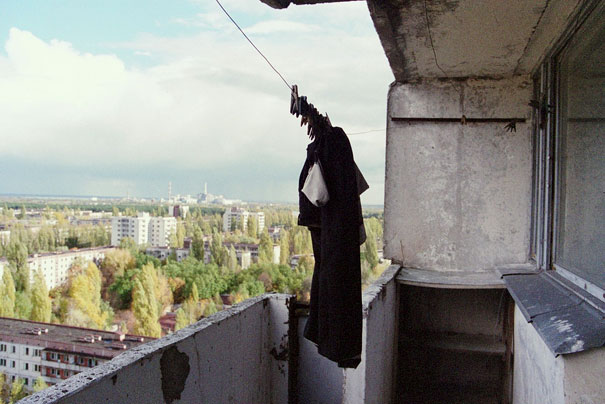
“Pripyat, ghost city abandoned after chernobyl catastrophe, has grown to a forest. nature takes over and invades and collapses human creations the views remind some apocalipthic films like I am a Legend; Views from highst building in town, a former Hotel“.
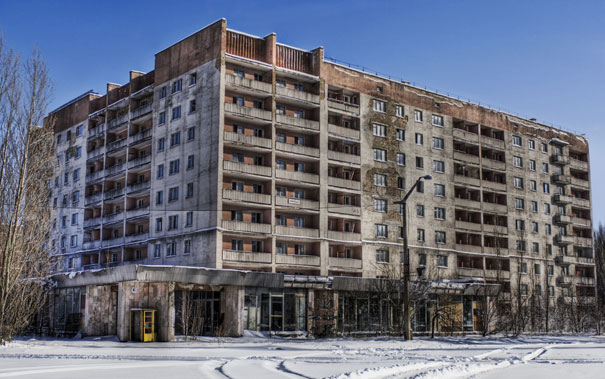
(Image credits:Stuck in Customs via: BoredPanda)

“Radiated Apartment Building”.
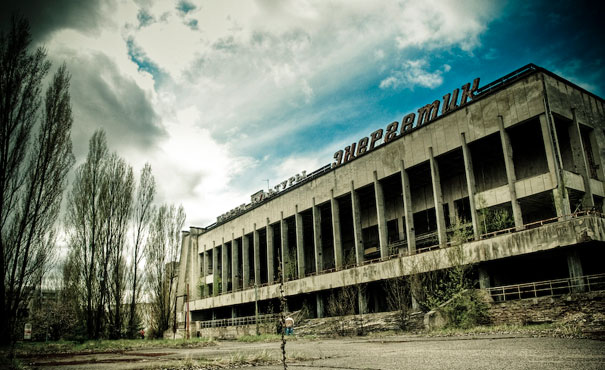
(Image credits:Vivo (Ben) via: BoredPanda)

The Government have left us – “From what I saw inside, I’d presume this was the local government building. There was a political event scheduled for a few days after the explosion and there are many pamphlets and banners still inside. “
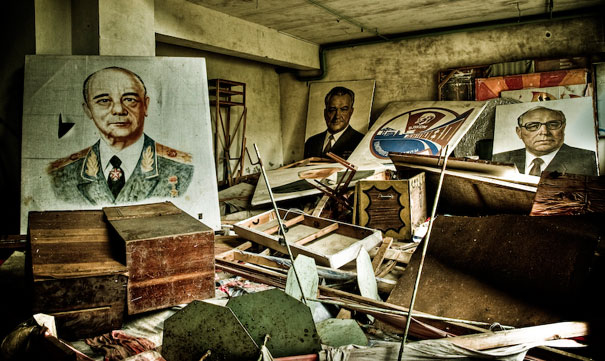
(Image credits:Vivo (Ben) via: BoredPanda)

“These extremely well preserved posters are the last evidence of what the city’s inhabitants were like. I’m unsure of the details but I believe these men were politicians”.
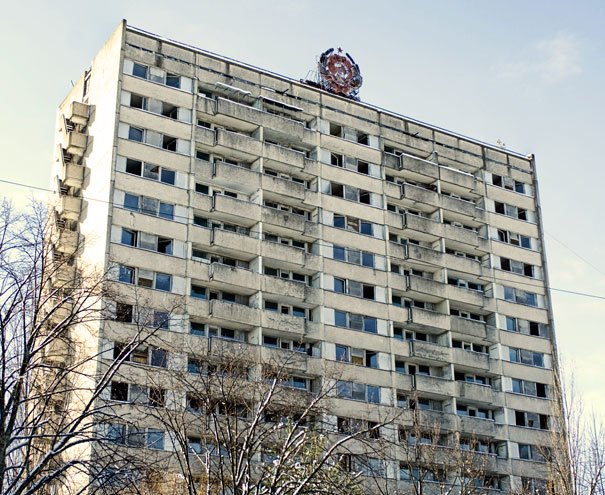
(Image credits:Stuck in Customs via: BoredPanda)

We can see hammer and sickle on the roof.
(Image credits:Carpetblogger via: BoredPanda)
(Image credits:Pedro Moura Pinheiro via: BoredPanda)

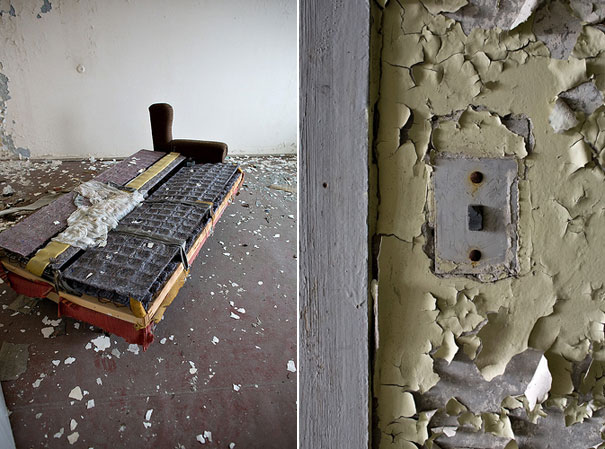
Left: “Dismantled sofa-bed in one of the apartments in the 16 story residential apartment”

Right: “Elevator call button in the 16 story residential apartment building facing the central square of Pripyat.”
(Image credits:Pedro Moura Pinheiro via: BoredPanda)
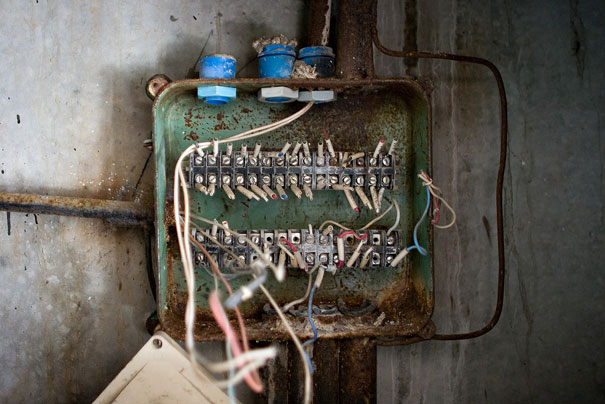
(Image credits:Pedro Moura Pinheiro via: BoredPanda)

“Electrical junction box in the 16 story residential apartment building”
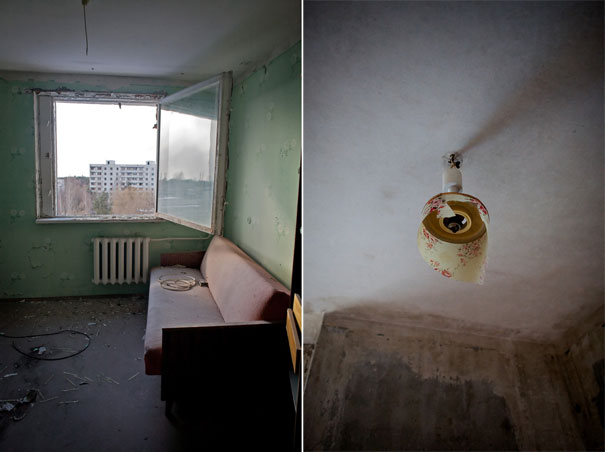
(Image credits:Pedro Moura Pinheiro via: BoredPanda)

Left: “Sofa under an open back window in one of the apartments in the 16 story residential apartment building”

Right: “Broken ceiling light fixture in one of the apartments in the 16 story residential apartment”
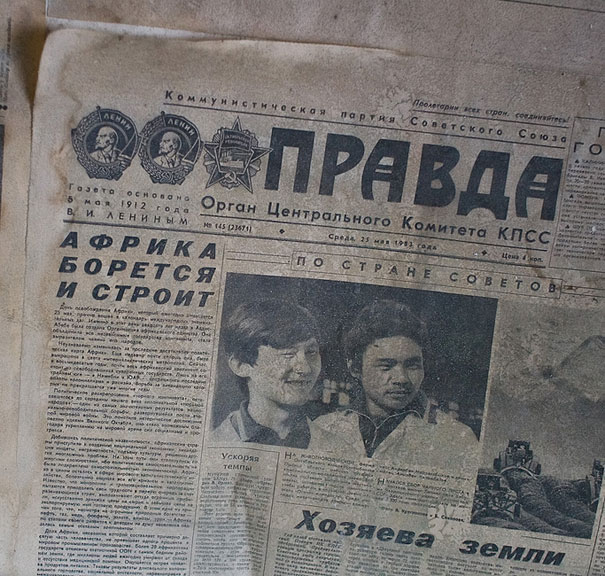
(Image credits:Pedro Moura Pinheiro via: BoredPanda)

“Newspaper used as a backing to glue the wallpaper in one of the apartments in the 16 story residential apartment building facing the central square of Pripyat.”

Newspapers title: “Pravda” (Truth) – the official propaganda newspaper of the Soviet Union

Newspapers date: “Wednesday, 25th of May 1983”

Articles title on the left: “Africa fights and builds”

Other title at the bottom: “Land owners”
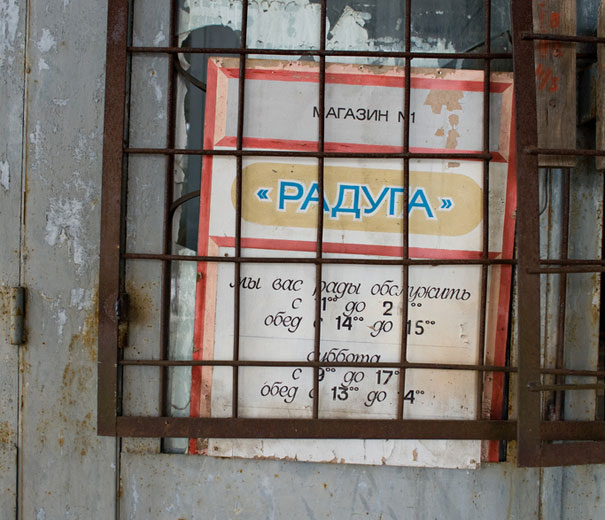
(Image credits:Pedro Moura Pinheiro via: BoredPanda)

Translations from the top to bottom:

“Store #1”

“Rainbow”

“Happy to provide service from 11 to 20 (?)

Lunch from 14 to 15”

“Saturday from 9 to 17

Lunch from 13 to 14”
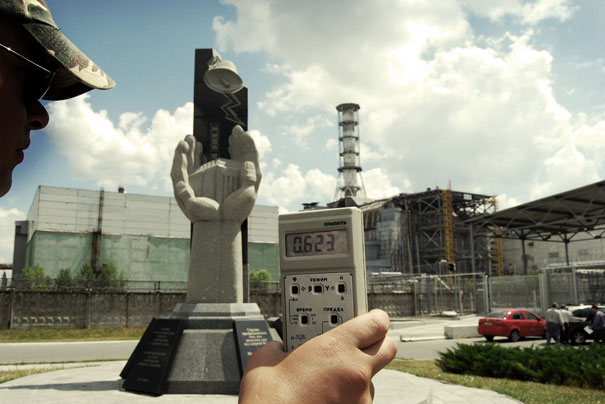
(Image credits:rusocer via: BoredPanda)

“400m away from the reactor (max allowed)” “2.0 rt being off-scale of the reader-device. average radiation level of a non contaminated area: 0.010 rt/m2″
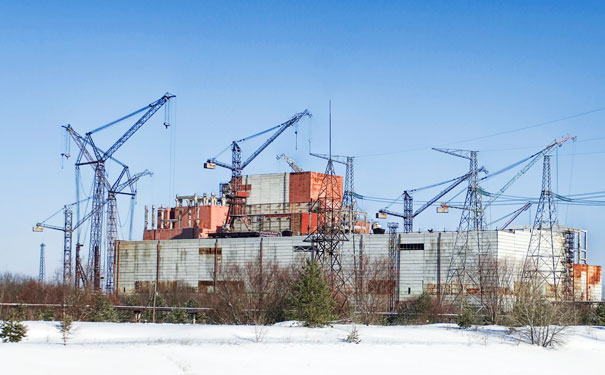
(Image credits:Stuck in Customs via: BoredPanda)

Two more reactors, no. 5 and 6, capable of producing 1 GW each, were under construction at the time of the disaster.

Living creatures
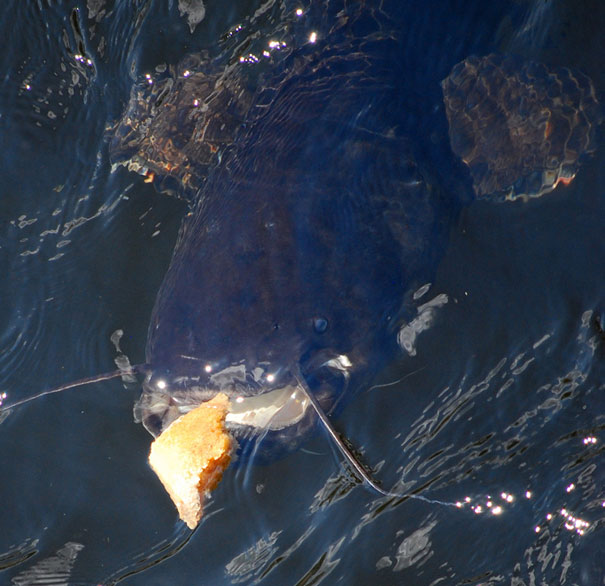
(Image credits:rusocer via: BoredPanda)

“These whikeers-fish survived and devolped countermeasures against the deadly radiation levels of the contaminated water in the rivers surrounding Chernobyl. we didnt there to have a splash with them but we fed them big chunks of bread that were guzzled in the blink of an eye !! “.

If you want to read real stories of Chernobyl survivors you should definitely check: Voices from Chernobyl: The Oral History of a Nuclear Disaster

Friday, March 11, 2011

Train wreck?

When you plan for that parenthood, how nervous do you get? Personally I am shaking like a leaf

Wednesday, January 26, 2011

A legend passes away


A nice obituary by rediff:


Classical singer Bhimsen Joshi passes away


Classical vocalist Pandit Bhimsen Joshi passed away on Monday morning in Pune. The veteran classical singer was rushed to a hospital with age-related ailments.

Joshi, an exponent of the Kirana gharana, was awarded the Bharat Ratna, India's [ Images ] highest civilian honour, in 2008.

The last of the titans of Hindustani classical music, Pandit Bhimsen Joshi was a rare genius who could transcend the mundane and transport his audience to the sublime with his gifted voice that captured both anguish and ecstasy.

What made him arguably the most popular Hindustani music vocalist of the current times was his impassioned renditions with a powerful and penetrating voice that showcased the aesthetic majesty of the Kirana gharana of which he was the celebrated exponent, as also the eloquent expression of light classical, devotional and the popular variety.

It was an awe-inspiring fusion of intelligence and passion that perhaps separated Joshi from other classical vocalists who dogmatically stuck to their gharana culture with a rigidity that possibly inhibited creativity.

Born on February 4, 1922, at Gadag in Dharwad district of Karnataka [ Images ], his journey to stardom in the world of Hindustani music was just as dramatic as it was arduous for one who decided to run away from home at a tender age of 11, in the quest of finding a guru to learn music.

Even as a child, Joshi's craving for music was evident to his family as he managed to lay his hands on a tanpura used by his Kirtankar grandfather, which had been kept away from his gaze at home. Music had such a magnetic pull over him that a bhajan-singing procession or azaan from a nearby mosque was said to draw him out of house.

On his way back home after school hours, Joshi used to stand near a shop selling gramophone records and listen to the music played by the owner for prospective customers.

There he chanced to hear a record of Abdul Karim Khan and resolved to sing like the Ustad. The quest for a guru started at that point, as Joshi told a biographer.

A slight provocation at home spurred Joshi to give effect to what had been brewing in his mind as he made his way to Gadag railway station, clad in a rumpled shirt and half pants, and embarked on a ticket-less train journey that took him to Bijapur where he sang bhajans, thus earning a pittance to feed himself.

Unable to find the master who could teach him, the intrepid youngster then wanted to go to Gwalior on advice by a music loving person but a mix-up of trains landed him in Pune, the seat of Maharashtra [ Images ] culture.

Joshi was in for a disappointment in his pursuit of a guru once again when eminent vocalist Krishnarao Phulambrikar, whom he approached for tutelage, insisted on a monthly fee that was beyond the means of the boy, whose parents by then had lodged a complaint with Gadag police after his disappearance from home.
Disappointed but not demoralised, Joshi left Pune for Mumbai [ Images ] and journeyed from place to place to finally reach Gwalior, his original destination and an acknowledged centre of Hindustani music.

With the help of sarod maestro Hafiz Ali Khan, who was under the patronage of the maharaja of Gwalior, the young Joshi joined the Madhav Sangeet Vidyalaya, a leading music institution in those days. His basics in khayal, the singing form that originated in Gwalior, were learnt during this period as he grasped the technical aspects of the gayaki.
Not content with the lessons at the Vidyalaya, Joshi again met Hafiz Ali Khan and persuaded the Ustad to teach him subtler points of difference between ragas Marwa and Puriya, the two classical melodies that remained his forte and a rage with his audiences.
With his passion for learning finer nuances of music undying and on advice from one of the teachers at the Vidyalaya, Joshi left Gwalior for Bengal where he became a student of Bhishmadev Chatterjee who taught him raga Gandhar.

After a brief stint with Chatterjee, who could not find enough time to teach his pupil due to a busy schedule, Joshi went to Jalandhar [ Images ], another leading centre of Hindustani music and the venue of an annual jalsa, a music festival that offered a platform for artistes from all over the country and listened to their music plentifully.

In Jalandhar, Joshi took up another pursuit side by side, which was rigorous physical exercises and acquired a strong physique which held him in good stead for vigorous riyaz throughout his life.

A chance meeting with Vinayakrao Patwardhan, a scholar musician, at one of the jalsas, prompted Joshi to go back to his home town as he advised the young artiste to approach Sawai Gandharva -- eminent exponent of the Kirana gharana -- at Kundgol and seek his discipleship.

Sawai Gandharva -- a leading disciple of Abdul Karim Khan -- subjected Joshi to a gruelling regime to test his urge and determination to learn music.

A strict disciplinarian, the guru (Sawai Gandharva) is said to have hurled a nut-cracker at the shishya (Joshi) when he slipped rather badly on a note-pattern.

Sawai Gandharva taught Todi, Multani, and Puriya ragas to Joshi as it was his considered view that mastery over these ragas was not only basic to the cultivation of a steady and tuneful voice, but also helped significantly in improving its volume, depth and range.

Joshi's shagiridi (tutelage) lasted five years during which he also accompanied his guru on concert tours.

He soon began giving mini-concerts in Dharwad, Sangli, Miraj and Kurundwad and among the music lovers who attended them was Mallikarjun Mansur, who was to later emerge as one of the great vocalists in the country.

His horizons widened and his wanderlust grew as he started going places visiting musical centres and gave a public concert in Mumbai which was a great success.

But it was a concert in Pune in January 1946 on the occasion of the 60th birthday of his guru that gave Joshi a real break, catapulting him to fame as he cast a hypnotic spell on his listeners.

He never looked back after this concert and was flooded with invitations from leading musical institutions in prominent places from all over the country.

A classicist by training and temperament, Joshi soon evolved an approach that sought to achieve a balance between what may be termed as "traditional values and mass-culture tastes" as he went on to have supposedly the largest commercially recorded repertoire in Hindustani vocal music.

What distinguished him from the ordinary was his powerful voice, amazing breath control, fine musical sensibility and unwavering grasp of the fundamentals that made him the supreme Hindustani vocalist, representing a subtle fusion of intelligence and passion that imparted life and excitement to his music.

In the forays he made outside the classical fold, Joshi lent is voice as a dhrupad singer for a Bengali film based on the life of Tansen and later sang as a playback singer for Marathi film Gulacha Ganapati [ Images ], produced and directed by celebrated Marathi humorist Pu La Deshpande, in addition to Hindi movies Basant Bahar and Bhairavi.

But it was his Sant Vani recitals, which bore the flair of Marathi Bhakti Sangeet that added immensely to his popularity in both Maharashtra and Karnataka which have had a long succession of saint-poets.

The appeal of Joshi's classical music transcended Indian borders as M Louis, a Dutch film producer and director who happened to listen to his raga Todi at an international film festival in Vancouver, produced a film on his music in India and exhibited it to the West.

Canadian business tycoon James Beveridge, who was deeply interested in Indian classical music, came all the way to Pune to shoot a 20-minute documentary on him which was titled Raga Miyan Malhar. Back home, it was renowned director Gulzar [ Images ] who made a 45-minute documentary on the life and career of the maestro in 1993 which won the national award for the best documentary film.

A man of many tastes, car driving was a passion for Joshi, who was also an expert swimmer, a keen enthusiast of yoga and a football player in his younger days. He had acknowledged his weakness for alcohol but left it in 1979 after it started affecting his career.

Be it sobriety or inebriation, the popularity and magnetism of this genius never ever faded.

Honours and awards came his way -- the Padma Shri (1972), Sangeet Natak Akademi award for Hindustani vocal music (1975), Padma Bhushan (1985) and the Madhya Pradesh [ Images ] government's Tansen Samman in 1992. Joshi's part in the Doordarshan feature Mile sur mera tumhara sequenced to inspire and promote national integration, earned him tremendous acclaim, striking a chord with the whole nation.

A biographer once said of him, "Here indeed is a man who has loved and lived his life with all its romance and intensity with a complete identification with his music… In real life, he was simple, transparent, forthright, and unobtrusive."

Panditji's public performances had dwindled in the last few years owing to the age factor. But everybody was in for a pleasant surprise when during the 2007 Sawai Gandharva festival -- the annual event which he had started in memory of his guru -- the maestro appeared on the stage on a wheelchair with an irresistible urge to sing before an avid audience that treasured the moment, which subsequently turned out to be his last public engagement.

The Bharat Ratna, India's highest civilian award bestowed on him in 2008, was nothing but a tribute paid by a grateful nation to a genius called Pandit Bhimsen Joshi, whose melodious exploration of Hindustani classical music enriched the lives of a multitude of connoisseurs as well as the common man who doted upon the artistic grandeur of his colossal voice.

Tuesday, January 18, 2011

The greatest sport bettor in the history of the world

A 60 minute segment on Billy Walters the greatest sport bettor the world has ever seen

Monday, January 17, 2011

Spams are fun and euros are weirdos

With Penis Enlarge Patch you can catch fish with your penis.

----------- In my spam folder


[PA030089.JPG]
Art on display at Milan

Team 2011

Squad:

MS Dhoni (capt & wk), Sachin Tendulkar, Virender Sehwag, Gautam Gambhir, Yuvraj Singh, Suresh Raina, Virat Kohli, Yusuf Pathan, Harbhajan Singh, Praveen Kumar, Zaheer Khan, Ashish Nehra, Munaf Patel, Piyush Chawla, R Ashwin


Facepalm selection: Piyush Chawla the legspinner who last play one day cricket in his teens.

Key injuries: Sachin (right hamstring), Gambhir (left knee), Praveen Kumar (elbow), Sehwag (shoulder)